AI Humanizer Vs. Paraphrasing Tool: They're Not The Same Thing
They look similar — text in, different text out. Under the hood, a synonym engine and an editorial rewriter are entirely different machines.
By Humanizerly Team · Updated August 16, 2026
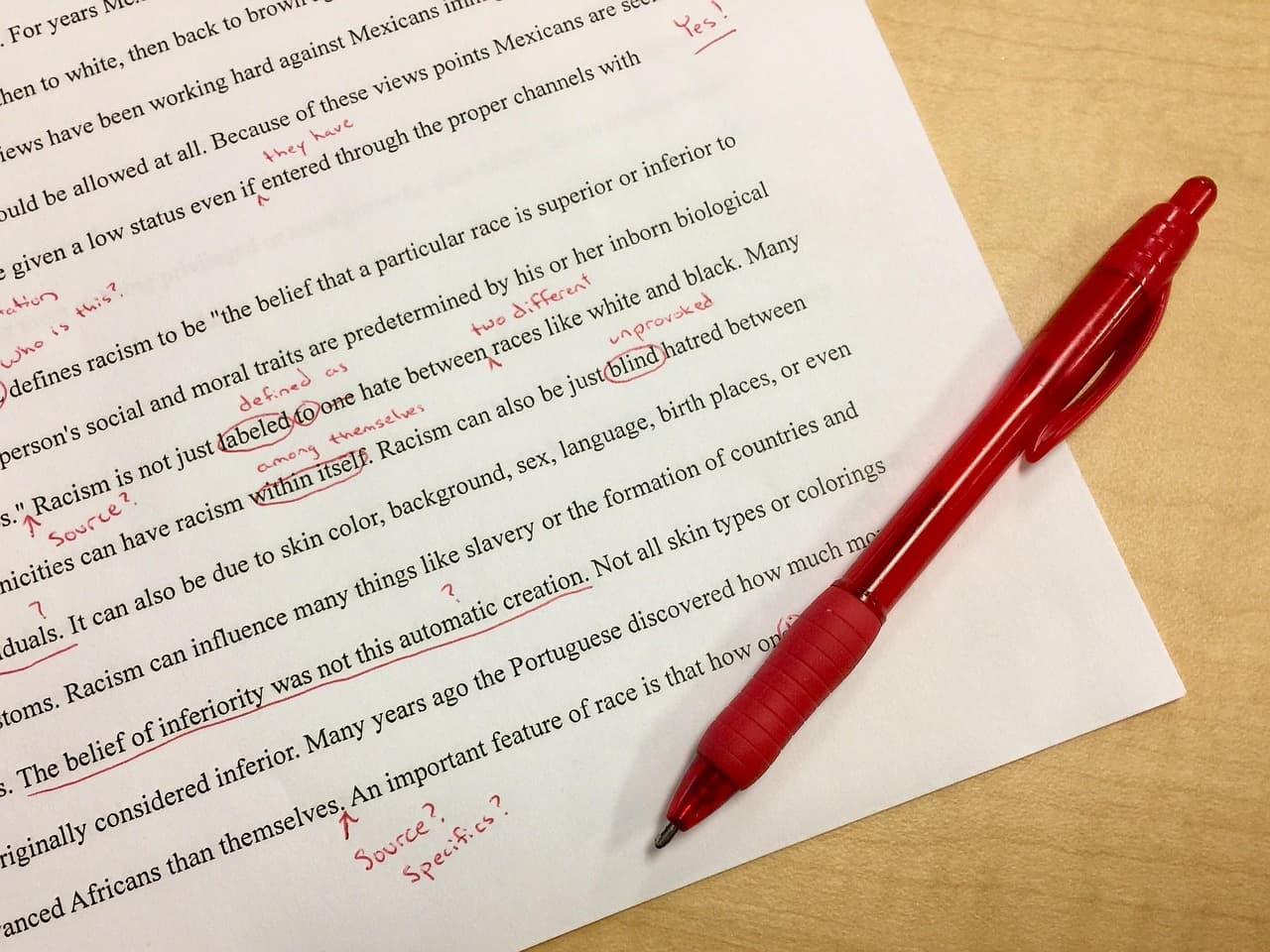
From the outside they're identical: paste text into a box, click a button, get different text back out. Which is why people use the two names interchangeably in casual conversation, and why so many are disappointed when the tool they picked does the wrong job for what they actually needed. Under the interface, a synonym engine and an editorial rewriter are fundamentally different machines, built to solve different problems, and the difference shows up exactly when it matters most — on real text, under real stakes, not on the cherry-picked demo sentence every product's homepage uses to make itself look good.
This distinction gets blurred constantly, partly because vendors have an incentive to blur it. "Paraphrasing tool" sounds dated, a relic of an earlier era of the internet associated with plagiarism-adjacent uses; "AI humanizer" sounds current and sophisticated. So a fair number of tools that are, mechanically, paraphrasers rebranded themselves the moment the newer term caught on, without changing what's actually happening inside. You can't tell which category a tool belongs to from its name alone. You can tell from testing it, which is most of what this guide is for.
Why This Confusion Persists
Part of the reason the two categories get conflated is that they share a genuine ancestor. Paraphrasing tools have existed for well over a decade, mostly built for a narrow set of legitimate uses: restating a sentence to avoid verbatim repetition within your own writing, generating headline variants for A/B testing, or helping a non-native writer see alternative phrasings for a sentence they're unsure about. Those tools worked at the level of individual words and short phrases, using a thesaurus-style lookup or a light statistical model, and for their narrow use cases, they did an adequate job.
Large language models changed what's technically possible, and a new category of tool emerged that operates completely differently — reading a passage for its meaning, then re-expressing that meaning the way an attentive human editor would. That's the technology usually marketed today as an "AI humanizer." But because both categories produce the same basic user experience — text in, different text out — and because some vendors are, frankly, still running old-style word-substitution logic under a rebranded name, the market looks a lot more homogeneous from the outside than it actually is on the inside. Two tools with nearly identical landing pages can be running completely different processes, and the only way to know which one you're dealing with is to test the actual output, not read the marketing copy describing it.
How A Paraphraser Works, Mechanically
Classic paraphrasing tools operate at the word and phrase level. The core operation is substitution: swap a word for a synonym, reorder a clause, flip an active construction into a passive one ("the team completed the project" becomes "the project was completed by the team"). Some more sophisticated versions chain several of these operations together, but the underlying unit of operation stays small — a word, a short phrase, a clause boundary — and the sentence's overall skeleton survives untouched. Only the words wearing that skeleton change.
This has legitimate, narrow uses. Purdue's Online Writing Lab has its own guidance on paraphrasing aimed at students restating a source in their own words for a research paper — a genuinely different goal from what most commercial paraphrasing tools are built for, and worth reading if word-level restatement is actually your task. If you've written a sentence three times in the same article and need variety without an idea worth restructuring, a synonym swap solves exactly that problem, quickly. If you're generating five headline variants to test, a paraphraser can throw options at you faster than staring at a blank cursor. These are real, if modest, jobs, and a paraphraser does them acceptably.
But look closely at what word-level substitution structurally cannot do, and the limits become clear fast. It cannot fix rhythm, because sentence shapes — where the commas land, how long each sentence runs, where a sentence breaks into a new one — are exactly what gets preserved by design. It cannot fix structure or flow across a paragraph, because it operates sentence by sentence (sometimes clause by clause) with no model of the passage as a whole. And it carries a specific, underappreciated danger: synonyms aren't actually equal, no matter how close a thesaurus entry makes them look. "Cheap" isn't "affordable" — one implies low quality, the other implies good value, and swapping between them silently changes the connotation of a sentence a reader will register even if they can't immediately articulate why. "Famous" isn't "notorious." In technical or academic writing, "significant" carries a specific statistical meaning that no thesaurus entry captures, and substituting it with "important" or "considerable" isn't a stylistic choice — it's a factual change to the claim. Paraphrased text produced this way often ends up clumsier and subtly wrong at the same time, which is close to the worst trade available: you've spent effort on a rewrite and come out with text that's both harder to read and less accurate than what you started with.
The Legitimate, Narrow Uses Of Word-Level Paraphrasing
To be fair to the category, it's worth being specific about where a synonym-level tool genuinely does its job well, because dismissing paraphrasers entirely would be its own kind of inaccuracy. If you need literal word-for-word variety — the same idea, restated with different vocabulary, for a context where meaning drift at the connotation level genuinely doesn't matter — a paraphraser is fast and adequate. Generating alternate versions of a single short slogan for internal brainstorming is a reasonable use. Finding a synonym for a word you've overused three times in one paragraph, where you'll personally review and pick the best option rather than accepting the tool's output wholesale, is a reasonable use.
The common thread across every legitimate use case: a human is still making the final judgment call on each substitution, and the stakes of any individual substitution being slightly wrong are low. The moment either of those conditions fails — you're accepting output wholesale without reviewing each change, or the text carries claims where connotation and precision actually matter — a paraphraser is the wrong tool, and reaching for one anyway is a common, avoidable mistake.
A Quick Vocabulary Note: Spinning, Paraphrasing, Humanizing
Three terms circle this topic and get used loosely enough that it's worth pinning them down before going further. "Spinning" is the oldest and bluntest term, dating back to early SEO-era content mills — running an article through automated synonym substitution to produce a technically-unique copy for duplicate-content purposes, with no concern for readability. "Paraphrasing" is the more respectable cousin, the same underlying mechanism marketed for legitimate restatement tasks, usually with somewhat better output quality than a raw spinner but still operating at the word and phrase level. "Humanizing" is the newest term, describing the language-model-based whole-passage rewriting this guide has spent most of its length explaining.
The three terms describe a rough spectrum of both mechanism and intent, but the boundaries are marketing-drawn, not technical ones enforced by any standards body — nothing stops a vendor from calling a spinner a humanizer, and plenty do. That's exactly why this guide keeps pointing back to testable behavior rather than labels: sentence-length variation, connotation drift, whether the output reads better or worse aloud than the input. Those tests work regardless of what a tool calls itself, which is more than can be said for the label on its homepage.
Where Paraphrasers Break Down Under Real Use
The breakdown shows up in three specific, testable ways once you push a paraphraser past its narrow comfort zone. First, meaning drift at scale: run a full paragraph through a synonym-substitution tool rather than a single sentence, and small connotation shifts compound. A paragraph where every third word has shifted slightly in meaning doesn't read as "different phrasing of the same idea" — it reads as a translation of the original passed through a slightly lossy process, technically related to the source but not quite saying the same thing anymore.
Second, syntactic awkwardness. Because the tool is working at the phrase level without a model of the whole sentence's grammar, forced substitutions sometimes produce constructions a fluent speaker would never actually write — grammatically defensible, technically parseable, but audibly wrong the moment you read it aloud. "The canine sprinted rapidly toward the domicile" is a real category of output from aggressive paraphrasing, and no fluent writer produces that sentence voluntarily.
Third, and this is the one that surprises people most: paraphrased text often scores worse, not better, on the exact quality dimensions people are usually trying to improve when they reach for one of these tools. If your actual goal was to make AI-generated text read more naturally — the most common reason people search for either of these tool categories in the first place — a synonym-substitution pass typically makes text sound less natural than the unedited original, because it introduces the syntactic awkwardness above without fixing any of the actual patterns (uniform sentence length, stock transitions, hedging boilerplate) that made the original read stiffly to begin with. You've spent effort and made the problem worse.
How A Humanizer Works, Mechanically
A humanizer built on a modern language model operates at an entirely different level: the whole passage, not the word or the phrase. It reads for meaning first — what is this paragraph actually claiming, and in what order — before it decides how to re-express that meaning, the same way a human editor reads a full paragraph before touching a single sentence within it. Sentence boundaries move as part of this process, which is itself a meaningful difference from paraphrasing: two short, choppy AI-generated sentences might merge into one that flows better; one long, overstuffed sentence might split into two that are each easier to follow. Stock transitions get replaced with actual logical connectors, or deleted outright when they weren't doing any real work. Inflated vocabulary gets deflated — "utilize" becomes "use," "facilitate" becomes "help" — not because those words are wrong, but because plainer words communicate the same content with less friction, which is what an editor's job actually is.
The full editing pass a genuine humanizer performs is described in more mechanical detail in how to humanize AI text, which walks through the specific moves — sentence-length variation, hedge-trimming, concrete verbs replacing abstract nouns — one at a time. What's worth emphasizing here is what's preserved through all of that structural movement: not the skeleton, the way a paraphraser preserves it, but the message. The claims, the evidence, the logical order of the argument, the precise scope of every qualifier. Sentences can rearrange completely and the underlying meaning can still survive intact, because the process is reading for meaning at every step rather than substituting at the surface.
The Risk Profile Actually Inverts
Here's the part that surprises people most, because intuition says a tool that changes more of the sentence should be riskier, not safer. In practice, a good humanizer operating under meaning-preservation constraints is safer than a synonym spinner, precisely because it understands context a thesaurus-style lookup cannot. A language model reading a full passage can recognize that "significant at p < 0.05" is a fixed technical claim that must survive verbatim, while "it is important to note that" is disposable filler that adds nothing and can be deleted outright. A thesaurus lookup can't tell those two phrases apart — to a word-substitution process, both are just text containing swappable words, treated identically regardless of what they're actually doing in the sentence.
This is worth sitting with, because it inverts a lot of people's default assumption about these two tool categories. The tool that changes more of the surface text — moving sentence boundaries, restructuring paragraphs, sometimes rewriting a sentence almost entirely — can be the more meaning-safe choice, because the underlying model actually understands what it's rewriting. The tool that changes less of the surface text — swapping individual words while leaving sentence structure alone — can be the riskier choice, because it's making substitutions with no understanding of what those words are doing in context. Surface-level restraint isn't the same thing as semantic safety, and conflating the two is exactly the mistake this whole comparison is trying to correct.
A Worked Example, Side By Side
It helps to see this concretely rather than take the claim on faith. Take a sentence like: "The study found that remote work increased self-reported productivity by 14% among employees with more than five years of tenure, though the effect was not observed in newer hires."
Run that through a typical synonym-substitution paraphraser and you'll often get something like: "The research discovered that working remotely boosted self-reported output by 14% among staff members with over five years of experience, although the impact wasn't seen in fresh recruits." Notice what happened: "increased" became "boosted," which carries a slightly more emphatic, almost promotional connotation the original didn't have. "Employees" became "staff members," a fine swap. "Newer hires" became "fresh recruits," which shifts the register toward something almost military or sales-oriented, a tonal drift the original sentence never had. The number and the core claim survived, but the sentence now carries a subtly different feel — more upbeat, less clinical — that a careful reader would notice even if they couldn't immediately name why.
Run the same sentence through a genuine humanizer and you're more likely to get something like: "Remote workers with more than five years of tenure reported a 14% productivity boost — though that effect disappeared for newer hires." The sentence restructured meaningfully: the subject changed from "the study" to "remote workers," the clause order shifted, an em dash replaced "though" as the connector. But the register stayed clinical and measured, matching the original's tone, and every element of the claim — the 14% figure, the tenure threshold, the absence of the effect in new hires — survived exactly. That's the difference in practice: more surface change, same underlying voice and identical facts, versus less surface change, a subtly different voice, and identical facts that nonetheless read slightly differently than intended.
The Tell-Them-Apart Test
Run the same AI-generated paragraph through any tool you're evaluating and check three things, in this order. First: did sentence lengths actually change shape? Count words per sentence in the original and in the output. Paraphrasers preserve the metronome — sentence lengths in the output cluster around the same values as the input, because sentence boundaries were never touched. Humanizers break the metronome on purpose, redistributing length the way a human editor naturally would, cutting a long sentence in two or merging two short ones into one with better flow.
Second: did "moreover" become "furthermore"? That's the signature paraphraser move — swap a stock transition for a different stock transition, leaving the underlying reliance on formulaic connectors completely intact. A genuine humanizer deletes the crutch entirely, or replaces it with an actual logical connector doing real work in the sentence, rather than trading one filler word for a slightly fancier filler word.
Third, and most reliably: read it aloud. Paraphrased text usually sounds less natural than the input it started from, because forced synonym substitution introduces small awkwardnesses the original writer never would have produced. Humanized text should sound more natural than the input — that's the entire point of the category, and if it doesn't, something in the tool's process isn't doing what it claims.
Detection Tools See These Two Categories Differently
Worth addressing directly, since it's the reason a lot of people search for either of these tool categories in the first place: paraphrased text and humanized text tend to interact with AI-detection tools quite differently, and neither interaction should be the actual goal you're optimizing for. Detectors are unreliable in both directions regardless of which tool produced the text in front of them, and building a strategy around any specific detector's current scoring behavior is building on ground that shifts every time detection models get retrained.
That said, it's worth understanding the mechanical reason paraphrased text sometimes scores oddly on detection tools: synonym substitution can produce a statistically unusual distribution of word choices — words picked for their thesaurus proximity rather than their natural frequency in that context — which some detection approaches pick up on as a different kind of anomaly than the one they're actually designed to catch. This isn't a reliable signal in either direction, and it's not something to optimize toward or away from. If your actual goal is to have your own writing read naturally and be judged on its substance, the honest path is the one covered in our full detection guide: write and edit toward genuine clarity and natural rhythm, not toward gaming a specific score, because the score is neither the actual goal nor a stable target.
Why Paraphrasers Are Often Cheaper, And What That Actually Buys You
It's worth naming a pattern in how these two categories get priced, because it explains some of the market confusion. Word-substitution paraphrasers are computationally cheap to run — a thesaurus lookup and some light rule-based logic require a fraction of the processing that a full language-model rewrite needs — and that cost difference often shows up directly in pricing. A rock-bottom "unlimited paraphrasing" plan is frequently cheap precisely because it's cheap to build and operate, not because the vendor is being unusually generous.
That's not automatically a reason to avoid a low-priced tool, but it is a reason to check which category you're actually paying for before assuming a lower price is a better deal. If what you need is genuine editorial rewriting — the kind that fixes rhythm, restructures for flow, and preserves meaning under real stress — a cheap paraphraser at a fraction of the price of a humanizer isn't a bargain. It's the wrong tool at any price, because it structurally cannot do the job you need done, no matter how many times you run your text through it.
Why "Different Enough" Is The Wrong Goal
A lot of confusion in this space traces back to a single wrong framing: treating "how different is the output from the input" as the measure of a good tool. That framing is exactly backwards, and it's worth explaining why, because it's an intuitive mistake that both categories of tool can exploit if you're not watching for it.
"Different enough" is a plagiarism-checker's question, not a writer's question. A plagiarism detector cares about textual overlap — how many consecutive words match a known source — and a tool optimized purely to defeat that kind of check will chase surface-level difference for its own sake, regardless of whether the result reads well or means the same thing. That's the spinning use case at its most cynical, and it's worth naming as a trap even outside the explicit plagiarism context: a tool that reports "originality score" or "similarity percentage" as its primary success metric is implicitly training you to value difference over quality, which is the wrong axis to optimize for essentially all legitimate writing tasks.
The actual question that matters for legitimate use, whether you're a student, a blogger, a marketer, or a researcher, is a different one entirely: does the output communicate what I meant to communicate, more clearly and more naturally than the input did? That question has nothing to do with how many words changed. A humanizer can leave 40% of a sentence's words completely untouched and still transform how the sentence reads, because the words that changed were the ones doing the structural work — a stock transition deleted here, a hedge trimmed there, a sentence boundary moved. A paraphraser can change 90% of a sentence's words and leave it reading just as awkwardly, or more awkwardly, than before, because word-level change was never the thing that made the original feel stiff.
Keep this reframing in mind whenever you're evaluating either category of tool: ask about clarity and naturalness, not about percentage different. The tools that are actually worth using pass that test. The ones chasing a difference score generally don't.
When A Paraphraser Actually Is The Right Tool
To be fair and specific rather than dismissive: if your actual task is narrow word-level variation — you need three different ways to phrase one short sentence, you're avoiding literal repetition within your own document, or you're brainstorming headline options you'll personally curate — a paraphraser does that job adequately and quickly, and reaching for a full humanizer would be overkill for a task that small. Use the right-sized tool for the actual job in front of you.
When You Actually Need A Humanizer Instead
If you're starting from AI-generated text — a ChatGPT draft, a Claude-assisted outline, anything a language model produced as a first pass — and you want the final version to read like a person wrote it, you need a humanizer, not a paraphraser. This is the use case almost everyone searching for either of these tool categories actually has, whether they'd describe it that way or not. The problems with raw AI output are rhythm, register, and structural flow — exactly the things word-level substitution structurally cannot touch, because those problems live above the level of individual words. A humanizer targets them directly.
How This Plays Out By Use Case
Students Editing Their Own Drafts
If you're a student working with a permitted AI-assisted draft, or editing your own rough writing to sound more like you, meaning preservation is the whole game — your grade depends on the substance surviving intact, not just the words changing. A synonym spinner's connotation drift is a genuine risk here in a way it might not be in lower-stakes writing, since a shifted claim in an essay can read as a factual error rather than a stylistic choice. Our student guide covers the fuller picture of where AI-assisted editing fits into coursework and where academic integrity draws a hard line.
Researchers And Academic Writers
Academic and scientific writing carries claims where the precise verb matters as much as the noun — "suggests" and "demonstrates" are not interchangeable, and a paraphraser has no way to know that distinction matters, only that they're both plausible synonyms in some contexts. Our guide to AI humanizers in academic writing goes into the specific constraints — citation accuracy, epistemic calibration — that make this one of the highest-stakes use cases for getting the tool category right.
Bloggers And Marketers
Content writers producing high volumes of AI-assisted drafts are usually optimizing for two things at once: sounding natural to readers and not reading as a wall of formulaic AI phrasing. A paraphraser addresses neither problem well, since it doesn't touch rhythm and can introduce its own awkwardness on top of the original's stiffness. The Content Marketing Institute has made the same point in a different context for years: readers reward genuine clarity and reward it consistently, regardless of the production method behind it. See our guide for bloggers and our guide for marketers for more on fitting genuine humanizing into a real content production workflow.
SEO Content Teams
If you're producing content at volume for organic search, spun or heavily paraphrased text has a specific, well-documented problem beyond the readability issues covered above: Google Search Central's guidance has repeatedly emphasized evaluating content for whether it's genuinely useful to readers, regardless of production method, and has taken action against large-scale programmatic content that reads as auto-generated filler. Text that's been through a synonym-spinning pass often reads exactly that way to both a human skimmer and an automated quality signal — technically unique, substantively thin. A humanizing pass on genuinely useful, accurate content is a different thing entirely: it's making real content read better, not disguising thin content as unique. See our SEO-focused guide for the fuller picture of where these tools fit into a legitimate content strategy.
How Search Engines And Editors Both See Through Spun Text
There's a pattern worth naming explicitly, because it shows up in two very different contexts that don't usually get discussed together: a human editor reading a spun paragraph and an automated content-quality system evaluating the same paragraph both tend to notice similar things, even though they're using entirely different methods to notice them. A human editor reads the awkward synonym choices and the slightly-off connotations and registers, consciously or not, that something is wrong with the prose — it doesn't quite sound like a person chose these specific words for these specific reasons. An automated system trained on large amounts of real writing picks up on statistically similar anomalies: word choices that are locally plausible but don't match the patterns of genuinely authored text in that register.
Neither of these is a coincidence, and neither should be read as "spinning tools are detected by AI, therefore avoid them for that reason specifically." The actual lesson is simpler and doesn't depend on any detector's current accuracy: text produced by forcing synonym substitution onto a sentence tends to read worse by any reasonable measure — to a person, to an editor, to an automated system — because the substitution process isn't actually solving the problem that made the original text feel stiff or generic in the first place. Fix the actual problem (rhythm, structure, natural phrasing) and you fix all three readings at once. Chase any one of them individually — especially the automated one — and you're optimizing for a symptom instead of the cause.
A Note On Academic Integrity And Spinner Tools Specifically
It's worth being direct about one particular use of paraphrasing tools that's worth avoiding outright, separate from the quality argument above: using a spinner to make copied or closely-paraphrased material technically different enough, word for word, to slip past a plagiarism checker while preserving just enough of the original meaning to pass a skim. That's a distinct use case from anything else discussed in this guide, and it's a straightforward integrity violation regardless of which specific tool touches the sentence — the International Center for Academic Integrity treats disguised plagiarism as a serious offense independent of the disguising method, and most institutional policies are written broadly enough to cover exactly this case. Nothing in this guide is meant to help with that use, and if that's the goal you have in mind, no tool comparison changes the answer: don't.
Questions We Get Asked Constantly
Can I use a paraphraser and a humanizer together? In practice this rarely helps and often hurts. Running text through a synonym-substitution pass first introduces the connotation drift and syntactic awkwardness described above, and a subsequent humanizing pass has to work around damage that's already been done rather than starting clean from your original meaning. Start from your own draft or a clean AI-generated one, and use the humanizer directly.
Is there a way to tell which category a tool falls into before subscribing? Yes — run the tell-them-apart test from this guide on the tool's free trial or free tier before paying anything. Check sentence-length variation, watch for the "moreover to furthermore" tell, and read the output aloud. A few minutes of testing tells you more than any marketing page will.
Does a humanizer ever behave like a paraphraser? Occasionally, on short or very simple input, since there's less room for structural rewriting when a sentence is already short and clear. On longer, more complex passages, the difference in behavior becomes obvious quickly, which is why testing with a full paragraph rather than a single sentence gives you a much more reliable read on which category a tool actually belongs to.
Why does paraphrased text sometimes feel worse than the original I started with? Because synonym substitution introduces new small errors — connotation drift, syntactic awkwardness — without fixing any of the actual structural problems (uniform rhythm, stock transitions) that made the original read stiffly. You've added noise without removing the signal that was bothering you in the first place.
If a humanizer restructures my sentences so much, how do I know nothing important changed? Verification is not optional with either tool, but it's especially important with a humanizer given how much surface-level change is happening. Use a tool with side-by-side comparison so you can check the rewritten version against your original claim by claim, rather than trusting the output blindly — the workflow Humanizerly is built around specifically for this reason.
Is one of these categories inherently more "honest" to use than the other? Neither tool category is inherently dishonest to use for legitimate editing of your own writing or permitted AI-assisted drafts. What's dishonest is a specific use — disguising copied material, misrepresenting AI-generated substance as fully your own work where that's prohibited — and that dishonesty exists independent of which tool touched the sentence. The tool isn't the ethical question. What you're using it for is.
I already paid for a paraphrasing tool. Is it a waste to also get a humanizer? Depends entirely on what you actually need each for. If you occasionally need quick word-level variants for a headline test or a repeated phrase, keep the paraphraser for that narrow job — it's genuinely faster for that specific task. If your main need is making AI-generated drafts read naturally, the paraphraser isn't doing that job no matter how long you've had it, and no amount of familiarity with a tool changes what it's mechanically capable of.
How do I explain the difference to a colleague who thinks they're the same thing? The sentence-length test is the fastest demonstration. Paste the same paragraph into both tools in front of them, count words per sentence in each output, and show that one preserves the original's sentence boundaries exactly while the other doesn't. That's a thirty-second, concrete demonstration that settles the argument faster than any explanation of the underlying mechanism.
Which One Do You Need
If you need to restate a single sentence for minor variety, either tool works, and a paraphraser is the faster, cheaper option for that narrow job. If you're starting from AI-generated text and want the result to read like a person actually wrote it — the use case almost everyone comparing these two categories actually has, whether or not they'd phrase it that way — you need a humanizer, because the real problems with AI text live in rhythm and register, exactly the layer word-level substitution can't reach. That's the job Humanizerly was built for, and the side-by-side editor makes the difference between the two categories visible on your very first paragraph, rather than something you have to take on faith from a comparison article — even this one.